
Aging does not simply make the skin looser. The face also loses some of the volume and structural support that once created fuller cheeks, smoother transitions, and youthful contours. That is why a face can begin looking tired or hollow even when the skin itself is still relatively firm. Injectables, particularly dermal fillers, can address this missing volume directly by restoring support where age-related changes have altered facial proportions.
Skin tightening has an important role, too, but it solves a different problem. Treatments designed to stimulate collagen can improve firmness and mild laxity. They do not physically replace volume that has disappeared. Understanding that difference is the key to choosing the right treatment instead of asking one technology to do something it was never designed to accomplish.
Continue reading to learn why dermal fillers often take the lead when true volume loss is the concern, when skin tightening still belongs in the plan, and how both can support thoughtful non-surgical rejuvenation.
What Are Dermal Fillers?
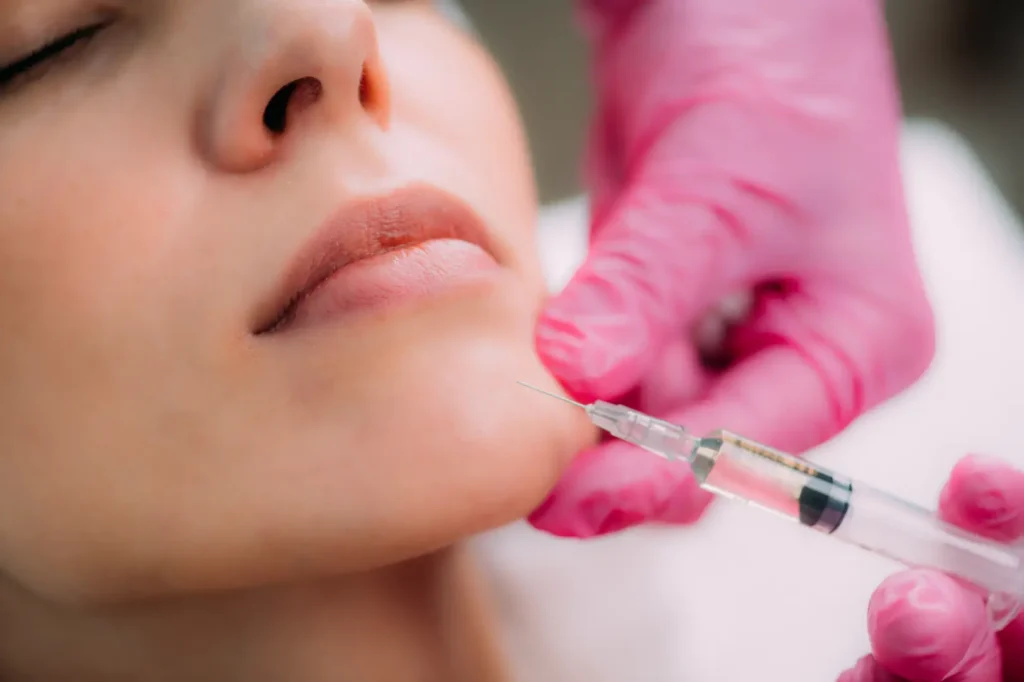
Before comparing treatments, it helps to understand exactly what filler is intended to do. Dermal fillers are injectable gel treatments placed beneath the skin to restore volume, refine facial contours, or soften selected lines and folds. Many modern fillers are made with hyaluronic acid, a substance naturally present in the body that helps support hydration and tissue volume.
As the face ages, several structural changes occur at once. Bone gradually remodels. Facial fat compartments change position and volume. Collagen declines. Skin becomes thinner and less elastic. Together, these processes can create hollow areas, flattened cheeks, deeper folds, and less definition through the midface and lower face.
Results are often visible immediately, although swelling can temporarily affect the first impression. Hyaluronic acid filler continues settling into the tissues over the following days and weeks.
For patients considering dermal fillers in Greenwich, the most important question should not be how much product can be added. It should be where volume has actually been lost and how conservatively restoring it could improve the entire face.

Why Dermal Fillers Restore Volume Better Than Skin Tightening
The easiest way to understand fillers vs. skin tightening is to stop thinking of them as competitors. They correct different components of facial aging. When volume is genuinely missing, filler has a major advantage because it can physically replace support.
Skin tightening can improve firmness around that structure, but it cannot recreate lost volume on its own.
1. Fillers Replace What Is Missing
This is the biggest distinction. A tightening treatment stimulates collagen and helps improve tissue firmness. It may make the skin look more supported or refined, especially when mild laxity is present. But if the cheek has lost volume, tightening the skin over that area does not restore the fullness that used to be there. Dermal filler can.
That makes fillers particularly valuable for facial volume loss, where the concern is not simply looseness but a reduction in the underlying support that gives the face its shape. A skilled provider can place filler strategically to restore selected areas rather than uniformly adding volume throughout the face. This can help bring back contours that gradually disappeared with age.
2. Midface Volume Needs Structural Support
The middle of the face is one of the most influential areas in facial aging. Youthful cheeks usually have projection and support. Over time, age-related changes can flatten that contour. As the midface loses support, neighboring areas may begin looking different as well.
Reduced midface volume can contribute to:
- A tired or hollow appearance
- Less cheek definition
- Greater contrast beneath the eyes
- More visible folds through the lower face
- A heavier appearance around the mouth
Skin tightening can improve mild looseness in this region, but it cannot recreate cheek projection. That is where well-planned filler becomes more effective for volume restoration. Restoring the right amount of support in the midface can improve the overall facial composition without aggressively treating every line individually.
3. Cheek Filler Can Influence More Than the Cheeks
Good cheek filler is not simply about creating bigger cheekbones. When used thoughtfully, it can restore structural support that has gradually diminished. This may improve the transition between the cheeks, lower eyelids, and lower face.
The objective is not to make the cheeks obvious. In fact, natural-looking filler should often be difficult to identify as a specific treatment. The face simply appears better supported and more balanced.
A conservative plan considers existing bone structure, facial width, age, sex, and the degree of volume loss before deciding how much product is appropriate. This is where injector judgment matters as much as the filler itself.
4. Filler Can Restore Facial Proportion
Volume loss does not always happen symmetrically or uniformly. One area may lose support faster than another. Some patients naturally have less projection in the chin or cheeks, and aging can make those differences more noticeable.
Dermal filler allows providers to restore very specific areas. That precision can improve relationships between facial features rather than simply making the entire face fuller. For example, carefully adding volume to the chin may improve the relationship between the lower face and nose. Strategic cheek support can help restore balance between the upper and lower face.
Skin tightening cannot create the same structural projection. It improves the quality and firmness of the tissue that is already there. This is why fillers can be more powerful when the goal is facial architecture rather than skin firmness alone.
5. Results Are Visible Immediately
Collagen remodeling takes time. With radiofrequency and other skin tightening technologies, patients often need to wait weeks or months before the full effect becomes visible. That gradual development can be a major benefit for patients who prefer subtle change.
However, filler offers something tightening treatments do not: immediate restoration of missing volume. Once the product is placed, the structural difference can usually be seen right away. The final result still needs time to settle, but the basic contour improvement is present from the beginning.
For patients whose main concern is hollowing or flattened facial contours, that immediate volume replacement can be especially satisfying.
6. Skin Tightening Cannot Correct Every Hollow
A common treatment mistake is assuming that any age-related change should be approached by making the skin tighter. Sometimes the problem is not loose skin at all. Consider a hollow cheek. If the overlying skin is reasonably firm but the underlying tissue has lost volume, tightening may create only a modest visible change because the missing structure remains missing.
The same principle applies to certain areas of facial shadowing. Collagen stimulation can improve skin quality, but shadows caused by volume deficiency often require something that physically restores support. This is one reason an experienced provider should evaluate the face before recommending an aging face treatment based solely on what appears obvious in the mirror.
7. Fillers Can Be Highly Targeted
One advantage of injectables is precision. A provider does not need to treat the entire face to create meaningful improvement. Small amounts can be placed in selected anatomical areas based on the patient’s needs. This makes dermal filler a versatile option for non-surgical facial rejuvenation.
Patients can often start conservatively and reassess after the product has settled. Additional treatment can be considered only if it adds genuine value. That staged approach helps prevent the overfilled appearance many patients worry about. It also reinforces an important principle: volume restoration should be deliberate, not automatic.
8. Tightening Still Matters When Laxity Is Present
Dermal filler may be superior for volume restoration, but that does not make skin tightening unnecessary. Many patients have both problems. The cheek may have lost volume while the jawline has also become less firm. The lower face may show mild laxity alongside structural changes.
In that situation, filling every loose area would be the wrong approach. Instead, filler can restore strategically selected volume while a tightening treatment targets collagen and firmness. This division of labor produces a more logical plan.
Fillers replace. Skin tightening firms. When each treatment is assigned the job it does best, results can look more natural and balanced.
Restore Structure Without Losing Yourself
Facial aging is layered, and effective treatment should be, too. Injectables such as dermal fillers can directly restore selected areas of lost volume, improve facial proportions, and rebuild support where aging has changed natural contours. Skin tightening remains valuable for firmness and laxity, but it does not replace structure that is no longer there.
At Lumiere Laser in Greenwich, CT, treatment planning can begin by identifying what is actually driving the change you see in the mirror. Whether the answer involves dermal filler, skin tightening, or a carefully planned combination, the goal is thoughtful rejuvenation that restores balance without making you look like someone else.
Contact us today to schedule your appointment!